
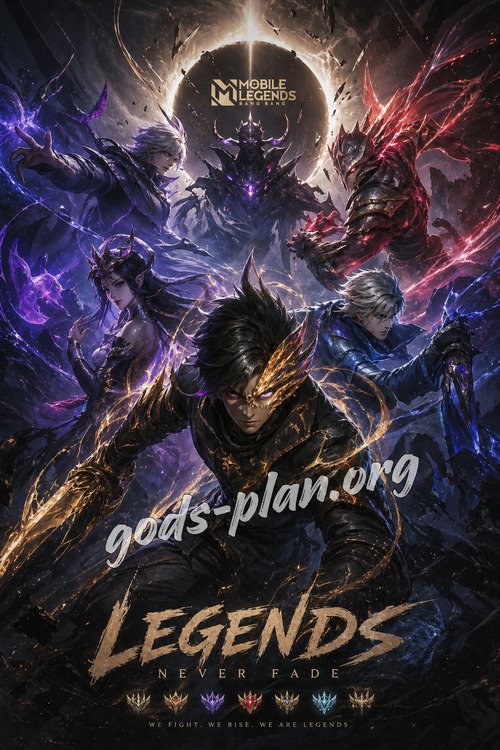
gods-plan.org – In the competitive ecosystem of Mobile Legends: Bang Bang, heroes are not just characters with abilities—they are strategic instruments that define how a match is played from the first second to the final push. Every hero contributes to a larger system of tempo control, map pressure, and team coordination, where success depends on how well players understand not only their own hero, but also how it interacts with others across different stages of the game.
At a deeper level, mastering heroes means understanding how roles evolve, how decisions shape map control, and how small advantages accumulate into overwhelming victories. This article explores the complete framework of hero mastery, focusing on roles, strategic execution, and competitive thinking that transforms average gameplay into consistent dominance.
Hero Roles and Core Identity in Competitive Gameplay
Every hero in Mobile Legends belongs to a broader ecosystem of roles, each with a distinct function that contributes to team structure. Understanding these roles is the foundation of strategic awareness, because each one influences how the game is played in different phases.
Tank heroes function as the backbone of any team composition. Their primary responsibility is not dealing damage, but absorbing pressure, initiating fights, and controlling space. Heroes like Tigreal and Atlas represent this archetype, excelling in crowd control and formation disruption.
A strong tank does more than initiate fights—they dictate engagement timing. By positioning aggressively in fog of war, they create psychological pressure that forces enemies to reposition defensively. This invisible influence often determines whether a team can contest objectives or must surrender space.
In high-level gameplay, tanks also act as vision controllers. They move ahead of the team to scout bushes, absorb potential damage, and secure safe positioning for damage dealers. Without a reliable frontline, even the strongest damage composition collapses under pressure.
Assassin Heroes and Target Elimination Strategy
Assassins are designed for precision and disruption. Heroes like Gusion and Lancelot specialize in eliminating high-value targets before they can react. Unlike tanks, assassins operate in bursts of opportunity rather than sustained engagement.
The core strength of assassins lies in timing and prediction. They do not engage directly—they wait for enemies to misposition or expend key abilities. Once a window opens, they strike quickly and retreat before counter-engagement occurs.
However, assassin gameplay is highly punishing. Mistimed engagements often result in instant elimination, making decision-making more important than mechanical execution alone. The best assassin players understand when not to engage, recognizing that patience is often more valuable than aggression.
Marksman and Mage Roles as Scaling Damage Engines
Marksmen and mages form the primary damage backbone of most teams. Marksmen scale into late game through item progression, while mages control mid-game tempo with burst damage and crowd control.
Heroes like Miya or Claude rely heavily on positioning and protection, becoming increasingly dangerous as the match progresses. Their role is to deliver consistent damage while avoiding threats from assassins and divers.
Mages, on the other hand, often dictate early rotations. Their wave clear and zoning abilities allow teams to move across the map faster and contest objectives efficiently. Together, these roles balance sustained damage with burst potential.
Lane Dynamics and Map Pressure Execution
Beyond individual roles, the game is structured around lanes that determine movement, pressure, and resource flow. Each lane serves a unique strategic purpose that influences how teams rotate and fight.
The EXP lane is typically occupied by fighters who can survive extended trades and maintain pressure without constant support. These heroes often act as secondary frontliners or semi-carries depending on game progression.
Success in the EXP lane is not only about winning fights but controlling wave management. Proper wave control allows rotation opportunities, enabling participation in Turtle fights or jungle skirmishes at critical moments.
A strong EXP laner understands timing above all else. Rotating too early can lead to lost experience, while rotating too late results in missed objectives. Balancing lane pressure with map influence is essential for effective gameplay.
Mid Lane Mages and Centralized Map Influence
The mid lane is the most influential position on the map due to its central location. Mages in this lane are responsible for controlling tempo through wave clear and rapid rotations.
Mid laners constantly shift between clearing waves and supporting side lanes. This dynamic role requires high map awareness, as every rotation has the potential to change the outcome of skirmishes elsewhere on the map.
A skilled mid laner does not simply stay in lane—they function as a global influence, creating pressure wherever they move. Their decisions often dictate early game momentum and jungle control.
Gold Lane Scaling and Late-Game Win Conditions
The gold lane is reserved for scaling heroes, typically marksmen who require items to reach full potential. This lane prioritizes safety, efficiency, and consistent farming.
Positioning is critical in the gold lane, as overextension often leads to early shutdowns. Players must balance aggression with survival, ensuring steady progression toward key item spikes.
By late game, gold lane heroes become primary damage dealers. Their survival in team fights often determines whether a team can secure victory or lose control during critical engagements.
Teamfight Execution and Strategic Decision Layers
Team fights represent the most decisive moments in Mobile Legends. Success depends not only on mechanics but on structured decision-making and coordination.
Initiation is the foundation of every team fight. Tanks or initiators must identify the correct timing to engage based on enemy positioning and cooldown availability.
A premature engage often leads to wasted ultimates and lost positioning, while delayed initiation allows enemies to reposition and reset. The ideal engage occurs when key enemy abilities are unavailable or when positioning errors are exposed.
Coordination between frontline and backline is essential. Without follow-up damage, even perfect initiation fails to produce meaningful results.
Target Priority and Burst Execution Windows
Every team fight contains critical targets that must be eliminated quickly. Marksmen and mages are typically the highest priority due to their damage output.
Assassins and burst mages excel at identifying and exploiting short windows where enemies are vulnerable. These burst windows often decide fights within seconds.
Target selection is dynamic and depends on positioning, cooldowns, and fight conditions. Misjudging target priority can result in inefficient engagements and lost fights.
Objective Conversion and Post-Fight Optimization
Winning a fight is only the beginning of advantage conversion. Successful teams immediately transition into objectives such as turrets, Turtle, or Lord.
Delays in conversion often allow enemies to recover and reset map control. Efficient teams minimize downtime between fights and objective execution.
Post-fight optimization ensures that every advantage is translated into long-term structural gain, rather than temporary momentum.
At higher levels of play, understanding heroes extends into broader strategic awareness, including map control, tempo, and psychological pressure.
Map Pressure and Rotational Advantage Creation
Map pressure is created through wave control and coordinated rotations. When multiple lanes are pushed simultaneously, enemies are forced into reactive positions.
This creates opportunities for jungle invasion, objective control, and forced engagements. Teams that control pressure dictate the flow of the match without constant fighting.
Rotational advantage is one of the strongest tools for gaining control over the game state.
Vision Control and Information Suppression
Although Mobile Legends does not use traditional ward systems, vision control is still critical. It is achieved through positioning, movement prediction, and map awareness.
By disappearing from vision, teams create uncertainty and psychological pressure. Enemies must assume danger, which slows their decision-making and reduces map freedom.
Information suppression is often more powerful than direct combat advantages.
Tempo Control and Game Flow Manipulation
Tempo determines how fast or slow a game progresses. Teams with strong tempo control dictate when fights happen and how objectives are contested.
Fast tempo favors aggressive compositions, while slow tempo benefits scaling teams. Understanding how to manipulate tempo is key to maintaining control over the game flow.
Teams that consistently control tempo rarely lose structural advantage.
Conclusion The Complete Hero Mastery Guide in Mobile Legends: Strategy, Roles, and Competitive Decision-Making
Hero mastery in Mobile Legends: Bang Bang is ultimately defined by the ability to combine mechanical skill, strategic awareness, and decision-making precision into a unified system of play. Each hero serves a specific function within a larger structure, where roles, lanes, and team dynamics interact continuously throughout the match.
Success comes not from playing individual heroes in isolation, but from understanding how they contribute to map pressure, tempo control, and teamfight execution. When players begin to see the game as a structured system rather than a series of disconnected fights, their consistency improves dramatically.
At its core, mastery is about alignment—aligning heroes with strategy, strategy with timing, and timing with execution. When all elements work together, victory becomes the natural outcome of controlled, intelligent gameplay rather than unpredictable chance.